
Health Food History
<
Back to all
Books Archive
No items found.
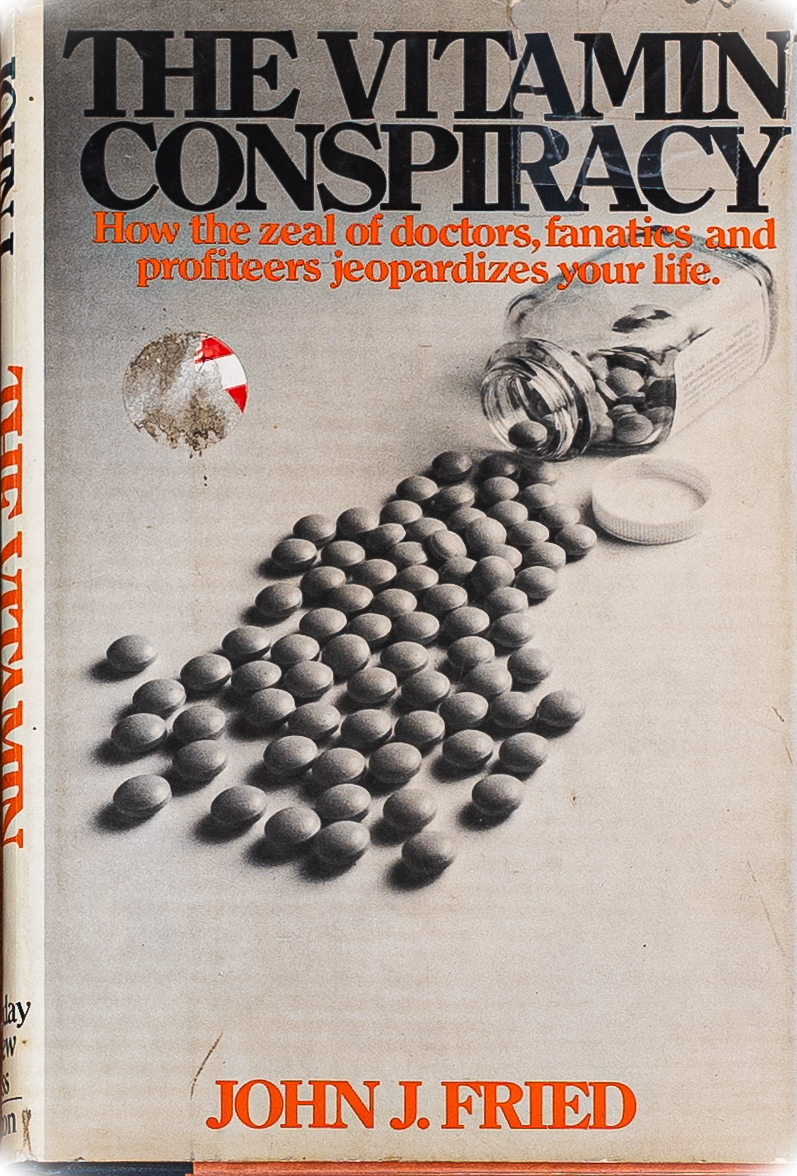
The Vitamin Conspiracy
1975
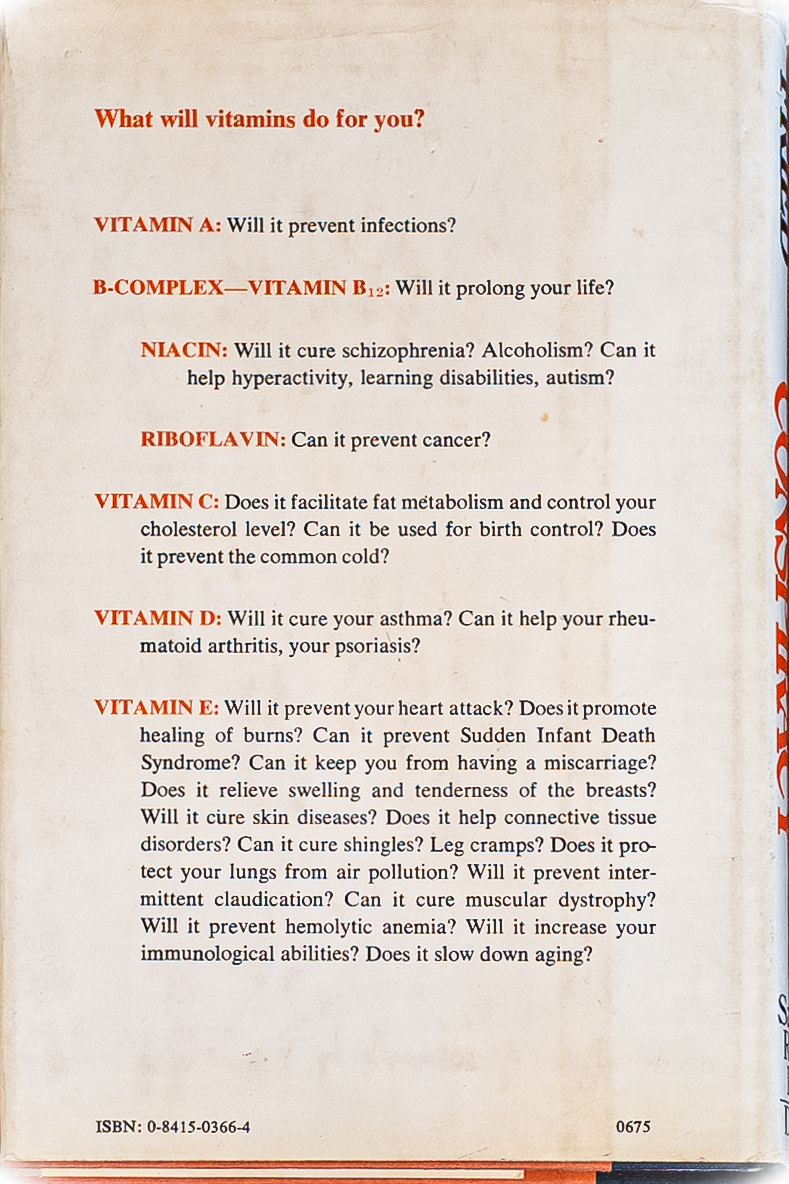
Investigates political, medical, and industrial forces shaping the public’s access to vitamins.
Key Takeaways:
- Examines how regulatory agencies, medical organizations, and pharmaceutical interests have shaped the availability and perception of vitamin supplements.
- Suggests that economic and professional incentives sometimes lead to downplaying or restricting nutrient-based therapies that are low-profit but potentially helpful.
- Reflects a broader 1970s mood of suspicion toward large institutions and a belief that promising, inexpensive health approaches may be sidelined.
Categories
Vitamins
History
Quackery
No items found.



© Health Food History 2025.
© Split Plate: The Untold History of America's Natural Food Movement 2025.
All rights reserved.
© Split Plate: The Untold History of America's Natural Food Movement 2025.
All rights reserved.